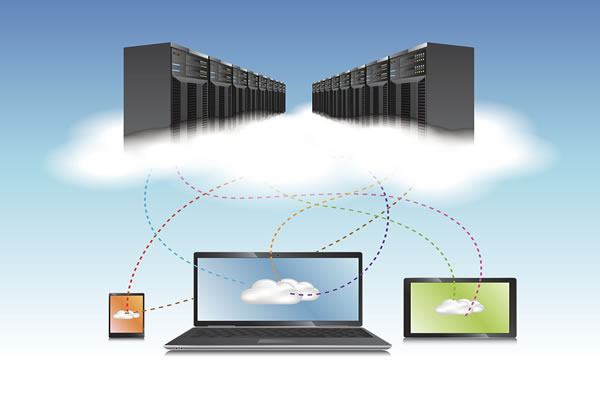
as digital transformation accelerates, the demand for cloud computing continues to rise, especially in a country as technologically advanced as south korea. korean local cloud servers are gradually favored by enterprises because of their unique advantages. this article will provide an in-depth analysis of the advantages of korean local cloud servers and their prospects in the market.
technical advantages of korean local cloud servers
korean local cloud servers have significant advantages in technology. first of all, south korea's internet infrastructure is highly developed, and the network speed is fast and stable, providing a reliable network environment for cloud services. secondly, many local cloud service providers adopt the latest virtualization technology and software-defined storage (sds), which can effectively improve resource utilization and system performance. in addition, korean companies also have strong r&d capabilities in data processing and analysis technology, making local cloud servers outstanding in processing big data and real-time analysis.
cost benefit analysis
when choosing cloud services, cost is an important consideration for enterprises. compared with foreign service providers, korean local cloud servers can save enterprises money in terms of transportation costs, delays, and legal compliance. since the data center is located locally, enterprises can reduce data transmission delays and improve business response speed. at the same time, enterprises can flexibly choose charging methods when cooperating with local service providers, thereby achieving better cost control. in addition, the operating model of local cloud servers in south korea is usually more transparent, avoiding the risk of hidden fees.
compliance and data security
as data privacy regulations become increasingly stringent, compliance has become an important criterion for enterprises to select cloud services. korean local cloud servers can better meet the requirements of local laws and regulations, such as the personal information protection act (pipa). local service providers usually have a better understanding of the local legal environment and can provide solutions that comply with relevant regulations to ensure the security of corporate data. in addition, because data is stored locally, companies can respond and handle more quickly when data leaks or security incidents occur, reducing potential risks.
market competitive advantages of local cloud servers
the korean cloud computing market is highly competitive, and many local cloud service providers continue to launch innovative products and services. compared with international giants, korean local cloud servers can adapt to market needs more flexibly and provide customized solutions. this flexibility enables local companies to carry out technology iteration and innovation more quickly to meet the diverse needs of customers. in addition, many local cloud service providers have established good cooperative relationships with large enterprises and government agencies, which provides strong support for their market expansion.
future market prospect analysis
looking to the future, south korea’s local cloud server market has broad prospects. with the widespread application of 5g technology, data transmission speeds will increase significantly, which is expected to drive further development of the cloud computing market. at the same time, the rapid development of emerging technologies such as artificial intelligence and the internet of things will prompt enterprises to continue to grow in demand for cloud services. the korean government is also actively promoting the development of the digital economy and creating a favorable environment for the cloud computing market. combined with these factors, local cloud servers are expected to experience significant growth in the coming years.
conclusion and recommendations
to sum up, south korea's local cloud servers are developing rapidly and are widely recognized by enterprises with their advantages in technology, cost, compliance and other aspects. for enterprises that want to improve their digital capabilities, choosing local cloud servers can not only meet business needs, but also reduce risks. in future development, enterprises should pay attention to the dynamics of the cloud computing industry and flexibly adjust their cloud service strategies to gain an advantage in an increasingly competitive market.
- Latest articles
- Why Do E-commerce And Video Platforms Need Japanese Native IP Websites To Ensure A Good Experience?
- Survival Strategies And Differentiated Service Explorations For Small And Medium-sized Vendors In The U.S. Server Hosting Industry
- How To Quickly Raise The Entry-level Salary Tier Of Hong Kong IDC Data Centers Through Certificates And Project Experience
- A Practical Guide To Comparing Malaysian Cloud Server Price Lists For Different Models And Bandwidth Options
- Where To Buy Taiwan Native IPs With Legal And Compliant Buying Guides
- Which Cloud Server In Vietnam Is A Good Case, Sharing Best Practices And Implementation Experiences Across Different Industries
- Gaming Industry Special Edition: Thailand Acceleration Server Rankings And Player Experience Report
- IP Reputation And Blacklist Risk Management When Choosing Hong Kong Multi-IP Server Hosting
- How Cross-border Developers Can Choose A German VPS Hosting Solution That Is Compliant And Supports GDPR
- In-depth Analysis Of The Pros And Cons Of Hong Kong Server CN2 And A Guide For Small And Medium-sized Enterprises To Buy
- Popular tags
-

Practical Advice On How To Pay For South Korean Cloud Servers And How To Standardize Records In Contracts And Accounting
This article provides practical advice on how to make payments for Korean cloud servers, as well as standard practices regarding contract terms and accounting records. It covers various payment methods, tax invoices, accounting entries, and measures to prevent compliance risks. -

A Developer’s Perspective On The Impact Of Korean Cloud Servers On Application Architecture In 2017
analyze the impact of korean cloud servers on application architecture in 2017 from a developer's perspective, covering aspects such as network latency, data residency, elastic scaling, storage io, security and operation and maintenance, and provide recommendations for architecture optimization and migration. -
Which Is Better, A VPS From South Korea Or One From Hong Kong, From The Perspective Of SEO And Search Engine Indexing?
Key differences between Korean and Hong Kong VPS services from the perspectives of SEO and search engine indexing: Practical tips including geolocation, access speed, IP origin, the impact on Baidu and Google, compliance with registration requirements, crawling settings, and CDN strategies.